
Photos © Patricio Cortés
Aftermath
Ballet for 30 female dancers set to a commissioned score by Michael Gordon
Choreography
Demis Volpi
Music
Michael Gordon: Aftermath
(commissioned score)
Costume Design
Katharina Schlipf
Lighting Design
Stefan Seyrich-Hofmeister
World premiere
April 17, 2014
Stuttgart Ballet
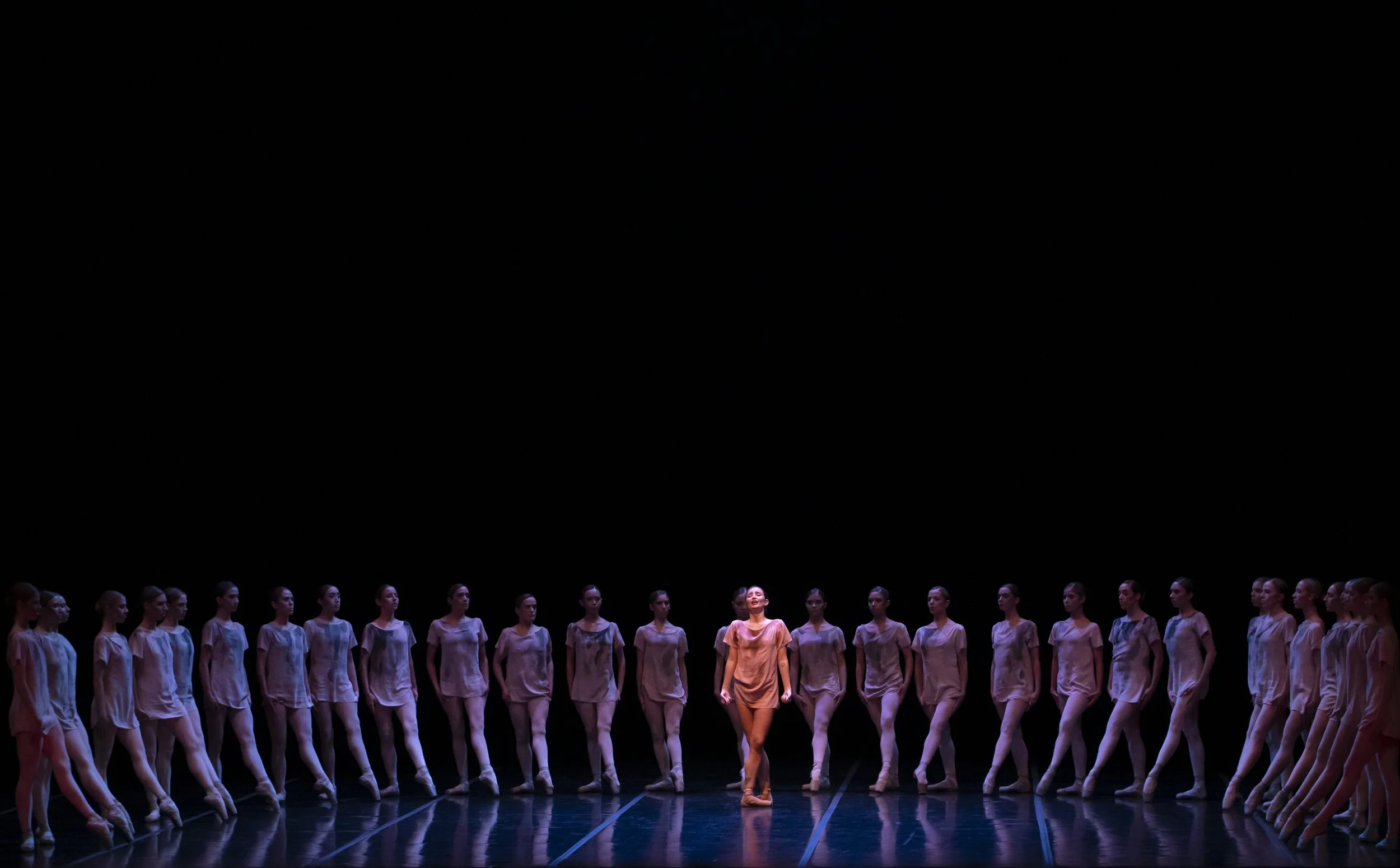
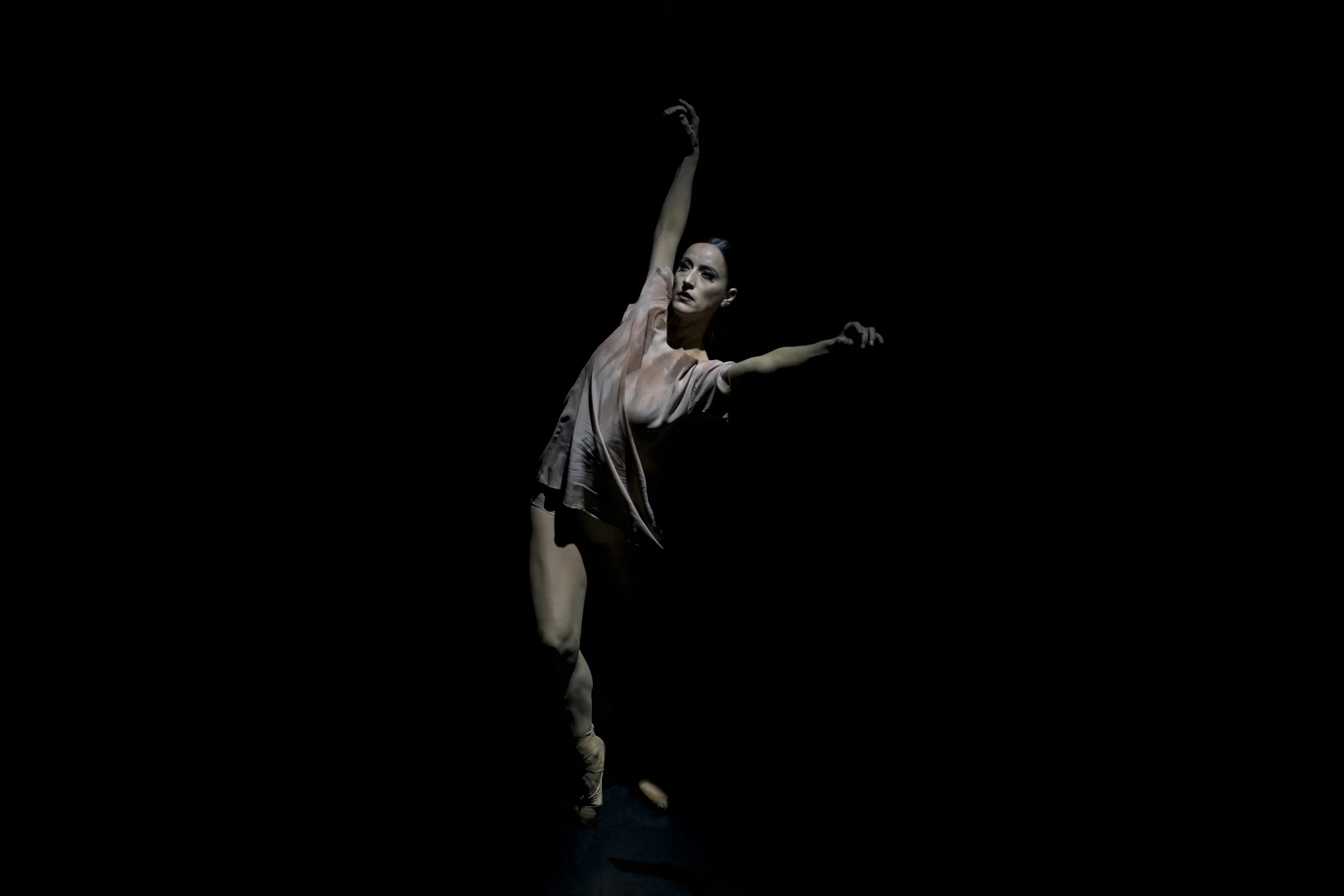
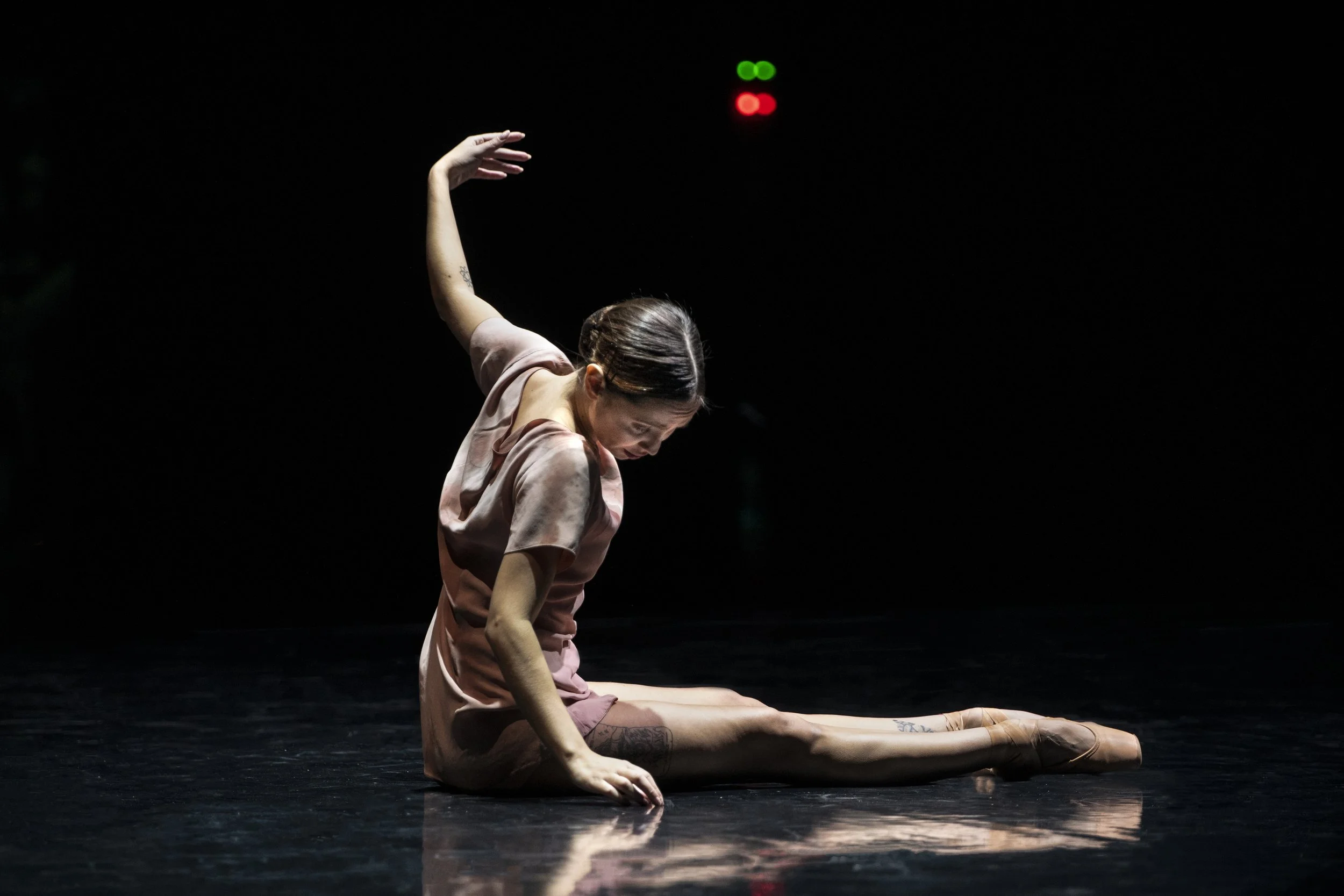
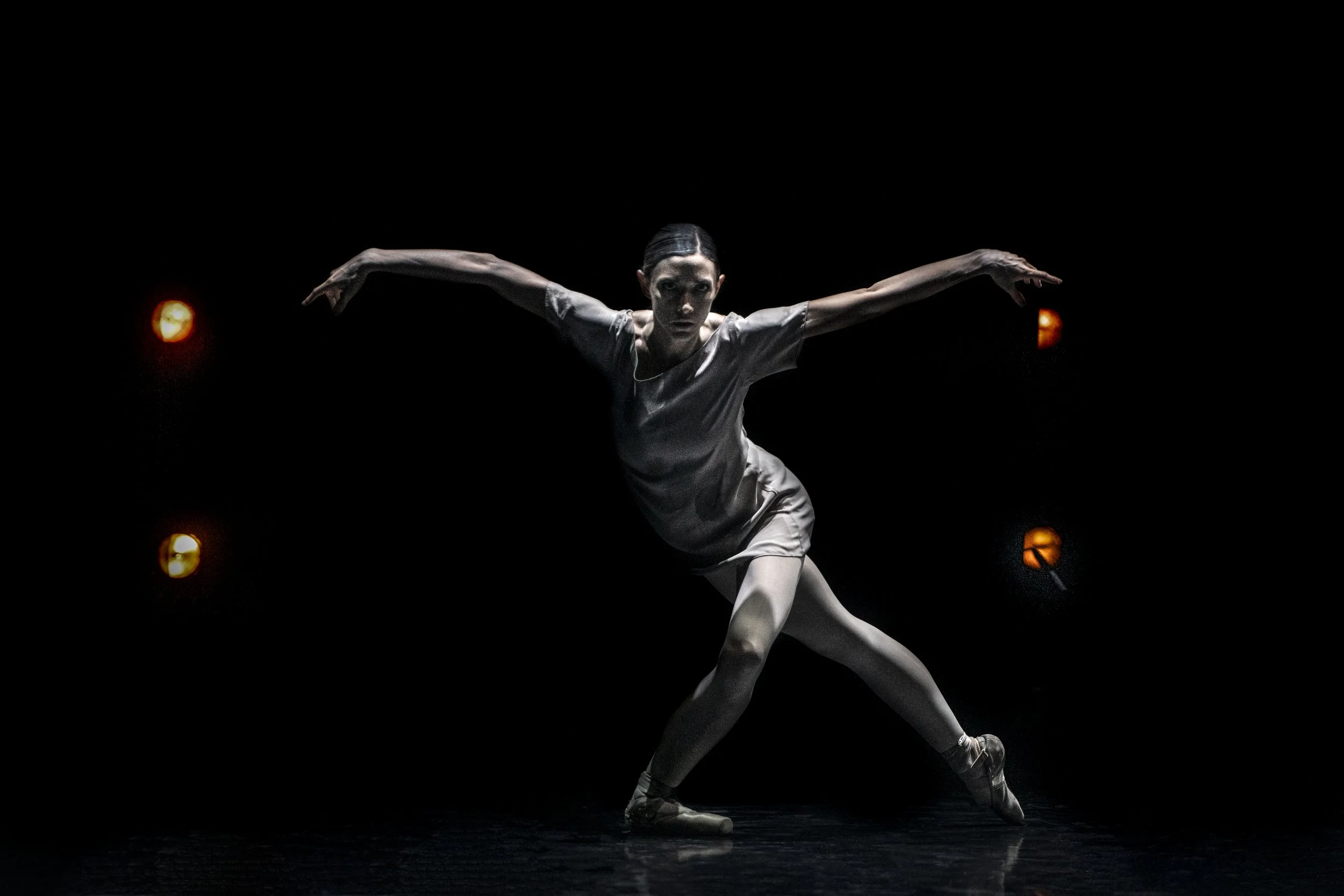
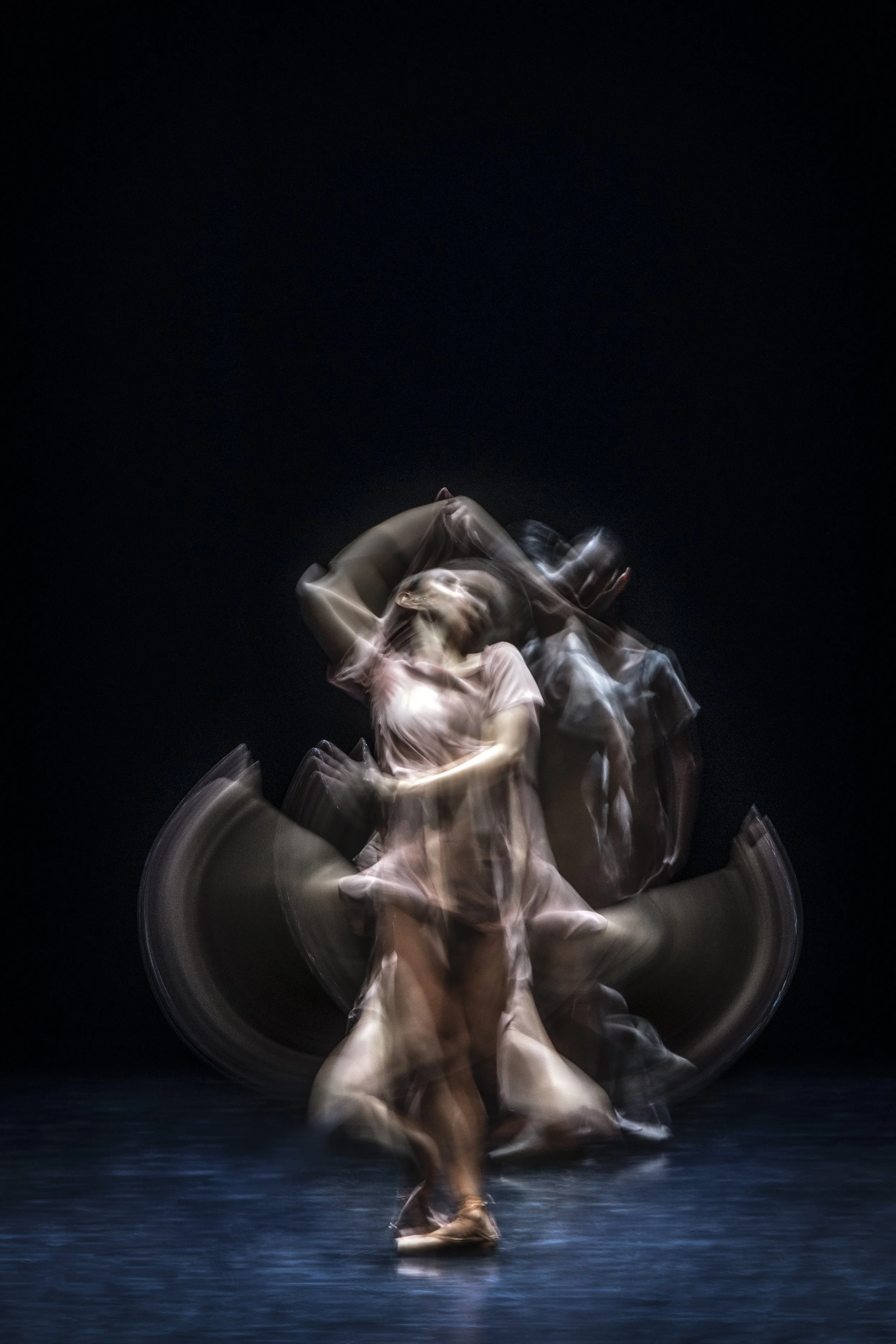
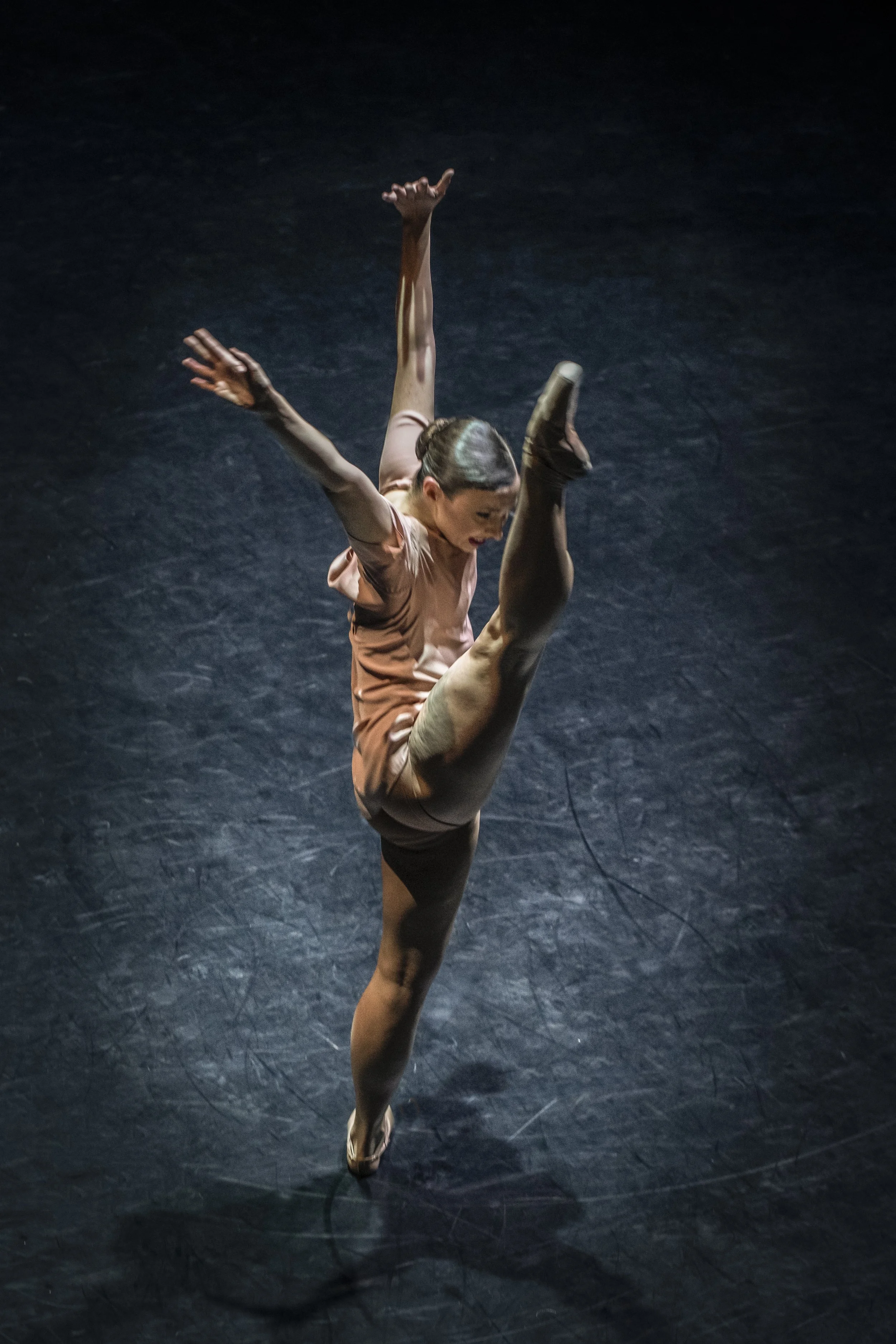
Created for the Stuttgart Ballet in 2014, Aftermath is an abstract reflection on resilience and the search for one’s own voice. Inspired by a song from Demis Volpi’s native Argentina, the work explores the tension between individuality and conformity, silence and expression. Created for 30 female dancers, Aftermath is set to a commissioned score by minimalist composer Michael Gordon.
-
Argentine choreographer Demis Volpi, based in Germany, makes his debut at the Teatro Colón with an abstract work that reflects on the artist’s struggle to preserve their own color
By Constanza Bertolini
When Demis Volpi premiered Aftermath with the Stuttgart Ballet in 2014—a work specially commissioned by the German company—he wrote a program note that pulsed with an Argentine heartbeat. In it, the choreographer recalled how, in his native country, a folk poet, Horacio Guarany (through the voice of Mercedes Sosa), had told him in childhood that “if the singer falls silent, life falls silent.” As the verses continue—if the singer falls silent, hope, light, and joy die of fright—the line gained deeper meaning with maturity and distance from home.
By then, the young creator had spent five years developing a work that resonated within him like the string of that guitar. Outwardly, however, he sought to translate into a contemporary language the idea proclaimed in those lyrics. “The piece is primarily about the artist’s struggle with themselves and with their surroundings for freedom and identity. It explores what the consequences would be if that struggle were ever abandoned or lost, if the singer were silenced. It is about the moment afterward, the effects of that catastrophic event: the aftermath.” How can one represent the void that a world without art might leave behind?
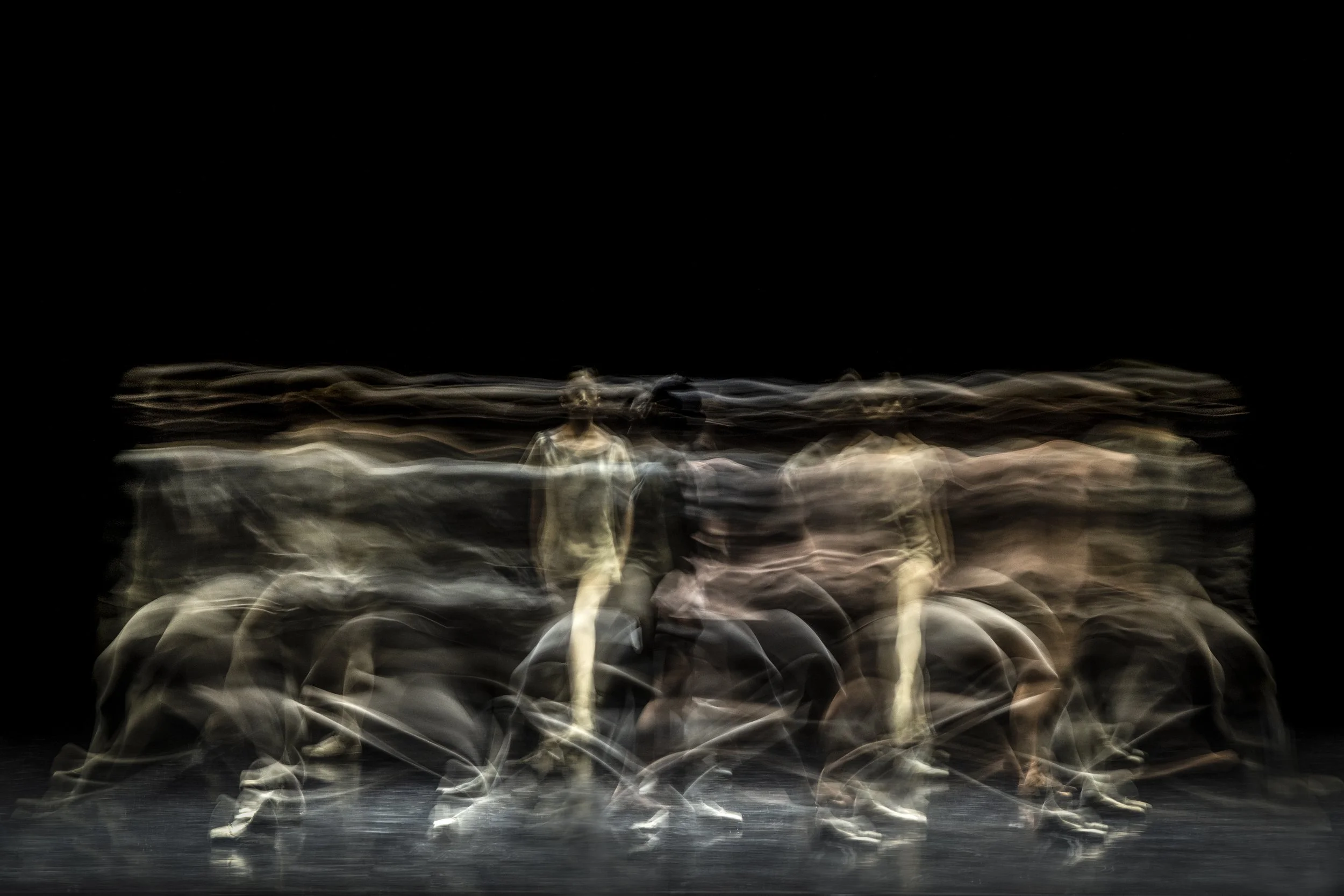
That battle is brought to the stage through the body of a soloist confronted by a grey mass that pursues her until it devours her individuality. “I wanted to create tensions and frictions between the dancer and the corps de ballet—a unified entity that, in turn, separates itself from the orchestra,” Volpi explains.
Within that definition lie several of the technical challenges faced by the performers, including a kind of mathematical complexity in pursuit of precision: the group must appear as a single organism, even without a musical foundation to cling to. For the soloist, there may be an even greater interpretive challenge: conveying this inner journey in all its nuances during the twenty-three minutes she remains continuously on stage.
Despite its abstract nature, the work generates multiple meanings. “It moves me because of its loneliness,” Julio Bocca, director of the Teatro Colón Ballet, told Volpi when he invited him to stage the piece. The choreographer had not consciously thought of loneliness as a theme, nor had he considered the idea of overcoming prejudice—an interpretation recently suggested by a colleague after watching a rehearsal.
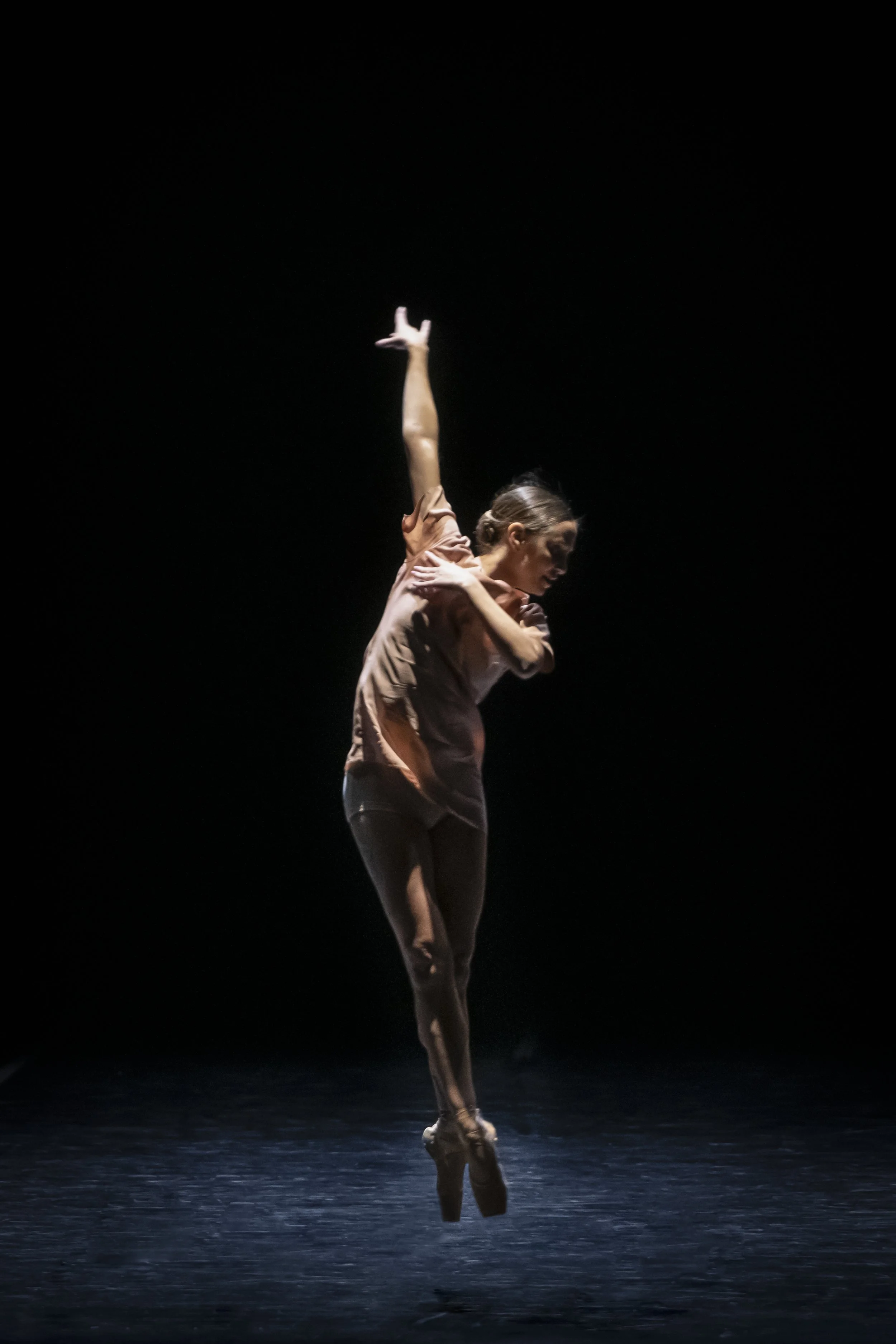
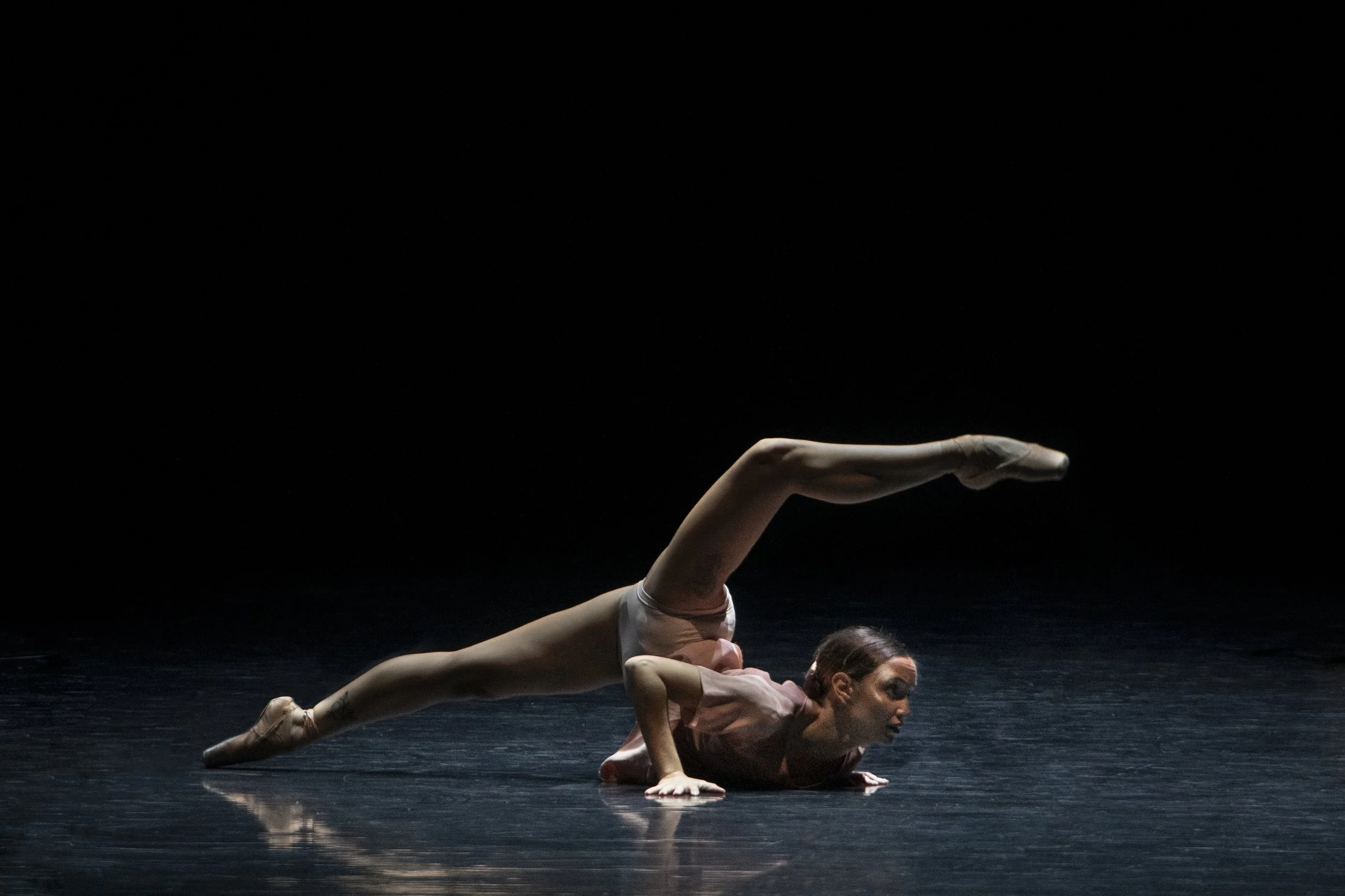
The imagery of struggle is clearly present in the choreography of the central character, whose clenched fists seek to break free from her surroundings, carving a path through them. In her effort to preserve her own color, she gradually disintegrates. Likewise, the movements of the intimidating ensemble reveal the pressure and threat exerted upon her.
“Now they’re taking her away.” “We’re moving on to the disappearance scene.” Hearing these directions spoken here, in Spanish, has led the choreographer to question a subconscious idea. Among the many possible interpretations, a new layer of meaning emerges for this work, which is being revived and revised for the first time in Buenos Aires.
Is it a political piece?
“Does a dance work exist that doesn’t have political connotations?” he reflects. “I think everything one expresses either challenges what we think or reinforces what we think, and that is already a form of political expression, because what we think—or don’t think—exists within a social context.”
For Aftermath, Volpi chose to work with a group of twenty-five women, making the pointe shoe a key element. He had long been interested in exploring how far this instrument could be pushed, using weight and force in unusual ways to create images with displaced lines, off-center balances, and broken equilibrium. Above all, however, he wanted to reveal something that is usually hidden: the sound of pointe shoes striking the floor.
Instead of concealing it, he chose to expose it, finding beauty and poetry in that gesture. In keeping with the metaphor of the singer, the pointe shoes do not remain silent; they “attack,” even “ruining” the original music composed by Michael Gordon. The orchestral score itself traces what Volpi describes as a pattern of “waves of movement” across the musical staff.
Embracing the changes that come with any adaptation, the version created for the Teatro Colón Ballet incorporates new sequences, the result of a rich two-way exchange between creator and performers—an exchange made possible by the author’s presence in the studio throughout the rehearsal process.
“Works gain refinement and clarity when they return to the stage,” the choreographer believes.
A Calling Card
Although another work by Demis Volpi—one and others—was previously seen in Buenos Aires, performed by Uruguay’s Ballet Nacional del Sodre at the Teatro Coliseo in 2016, it is difficult to say whether this “calling card” is truly representative of his artistic trajectory.
Since his very first piece, on and on and on (2006), he has created around fifty highly diverse productions, ranging from narrative and abstract works to duets, large-scale ballets, and experimental projects.
“Despite everything that lies behind me, at forty years old I am still discovering my own way of expressing myself. Consider that this is my first time returning to Argentina, and that experience will also change me as an artist and as a person. I have no interest in being boxed into any category or developing a fixed style. What I have always wanted is to create worlds. In that sense, I feel Aftermath succeeds because it generates a very particular atmosphere through the music, the staging, and the tension between the corps de ballet and the soloist. It creates a complete world of its own; it is coherent.”
Volpi’s story is one of an early vocation. Trained in classical dance in Buenos Aires before even starting primary school, he emigrated with his family as a teenager and completed his studies in Toronto and at the John Cranko School in Stuttgart. He later joined the Stuttgart Ballet and began his career as the company’s resident choreographer.
His experience as an artistic director began in 2020 at Ballett am Rhein in Düsseldorf and Duisburg, and eventually continued in Hamburg.
“I stopped dancing by choice at the age of twenty-four. I had begun choreographing at twenty, and I felt I had to choose a path, because when I create a work, I dedicate twenty-four hours a day, seven days a week to it. My mind never stops. I found it difficult to be standing in the corps de ballet rehearsals of Onegin, for example, while thinking about something else entirely. So I made a decision.”
It is only natural that his debut at the Teatro Colón and this return to his hometown—a city he had not truly revisited since leaving at age fourteen, aside from a brief tourist visit lasting a few days—would move him deeply while also filling him with anticipation.
“I went to Martínez, where I grew up, by train—I always took the train—in order to activate the time machine and bring back memories,” he recalls. “I expected some kind of cathartic reaction, but it never came. On the contrary, being here felt completely natural.
“What surprises me is that everything seems on the verge of overflowing: the vegetation, the traffic, the colors, the sounds, the conversations—everything feels as though it is about to touch you. I had forgotten that, and I am fascinated to rediscover it. I’ve been writing a lot.”
The first ballet he ever saw as a child took place in this very theater: Julio Bocca dancing Don Quixote. It was the early 1990s.
“At the time, I told my father: ‘One day I’m going to dance here.’”
He smiles, visibly moved.
“A childhood dream. And because I always feel that when one of my works is danced, I am dancing on stage as well, I will now fulfill something that has always been a tremendous source of motivation for me. Beyond its architectural beauty, this place carries so much history and innovation—Nijinsky performed here!
“It is a great honor for me, and if I’m honest, yes, it’s my first time—but I hope it won’t be the last.”
Originally published in the Teatro Colón program book for the premiere of Aftermath on May 7, 2026. This English version was translated for www.demisvolpi.com with the assistance of AI.
-
El coreógrafo argentino Demis Volpi, radicado en Alemania, hace su debut en el Teatro Colón con una obra abstracta que reflexiona sobre la lucha del artista por mantener su color
Por Constanza Bertolini
Cuando en 2014 Demis Volpi estrenaba en el Ballet de Stuttgart Aftermath, un trabajo especialmente comisionado por la compañía alemana, escribió un texto para el programa de mano del espectáculo que latía con pulso argentino. El coreógrafo contaba allí que en su país natal un poeta del folklore, Horacio Guarany (en la voz de Mercedes Sosa), le había dicho durante su infancia que “si se calla el cantor, calla la vida” y esa línea –que se abre hacia otras direcciones con el correr de los versos: si se calla el cantor mueren de espanto/ la esperanza, la luz y la alegría– se fue cargando de sentido con la madurez, a la distancia. El joven creador había elaborado para entonces, durante cinco años, una obra que sonaba dentro suyo como la cuerda de esa guitarra, pero hacia afuera buscaba traducir a un lenguaje contemporáneo la idea que se enarbolaba allí como bandera. “La pieza se trata principalmente sobre la lucha del artista consigo mismo y con su entorno por la libertad y la identidad, e intenta explorar cómo serían las consecuencias si alguna vez abandonara o perdiera esa lucha, si se callara el cantor; se trata del momento posterior, de los efectos de ese acontecimiento catastrófico: el aftermath”. ¿Cómo representar el vacío que podría dejar un mundo sin arte?
Esa batalla está llevada a la escena en el cuerpo de una solista que se enfrenta a una masa gris que la persigue hasta devorar su singularidad. “Quise crear tensiones y fricciones entre la bailarina y el cuerpo de baile, un ente unificado que, a su vez, se separa de la orquesta”, explica Volpi. Y en esa definición se cifran varios de los desafíos técnicos que enfrentan los intérpretes, como la complejidad matemática en pos de la precisión: el grupo debe verse como una sola cosa, aun sin tener una base musical a la que aferrarse. Para la solista tal vez haya un reto interpretativo superior, la transmisión de ese viaje interior con todos sus matices durante los 23 minutos que la mantienen continuamente en el escenario.
A pesar de su carácter abstracto, la obra dispara múltiples sentidos. “Me conmueve la soledad”, le dijo el director del Ballet Estable del Teatro Colón, Julio Bocca, cuando lo invitó a montar este trabajo. El coreógrafo no había pensado en ese tema como tampoco en un proceso por superar los prejuicios, una lectura que le acercó hace unos días un colega al ver un ensayo. El imaginario de la lucha aparece claramente referenciado en la coreografía del personaje central, de puños cerrados, que busca sustraerse del contexto, abrirse paso y en la pugna por mantener su color propio va desintegrándose; del mismo modo se advierte en los desplazamientos del intimidante conjunto el asedio y la amenaza que ejerce. “Ahora se la llevan”, “Vamos a la escena de la desaparición”: estas indicaciones, pronunciadas aquí, en castellano, llevan al creador a preguntarse ahora por una idea subconsciente. Entre todas las lecturas posibles, surge así un nuevo significado para la pieza que se repone por primera vez, revisada, en Buenos Aires.
¿Es una obra con connotación política?
“¿Existe la obra de danza que no tenga connotación política? Creo que todo lo que uno expresa o bien desafía lo que pensamos o conforma lo que pensamos, y eso ya es una forma de expresión política, porque lo que pensamos o no pensamos está dentro de un contexto social”, reflexiona.
Volpi eligió para Aftermath trabajar con un grupo de veinticinco mujeres tomando como elemento clave la zapatilla de punta. Siempre estuvo interesado en explorar hasta dónde podía llevar este instrumento, empleando de manera inusual el peso y la fuerza para generar imágenes con líneas desplazadas, fuera de eje y equilibrios que se quiebran, pero sobre todo para descubrir un componente que en general se intenta esconder: el sonido de la punta sobre el piso. Y en lugar de ocultarlo, decidió mostrarlo, encontrando en ese gesto belleza y poesía. A propósito del cantor, las puntas no se callan, “atacan” hasta “arruinar” la música original que compuso Michael Gordon. La partitura para orquesta dibuja sobre el pentagrama un diseño como de “olas de movimiento”.
Embarcado en el cambio que conlleva toda adaptación, el montaje para el Ballet del Colón incorporó secuencias nuevas como resultado de esa rica doble vía de intercambio entre creador e intérpretes que habilita la presencia del autor en la sala a lo largo del proceso. “Las obras ganan refinamiento y nitidez cuando vuelven a presentarse”, considera el coreógrafo.
Carta de presentación
Si bien con anterioridad se ha visto en Buenos Aires otro título de Demis Volpi –One and Others, en una escala porteña del Ballet del Sodre uruguayo, en 2016, en el Teatro Coliseo–, no es fácil determinar si esta “carta de presentación” es representativa de su trayectoria. Desde su primer palote (On and on and on, 2006), cuenta hasta la fecha con unas cincuenta producciones muy distintas, entre propuestas narrativas y abstractas, dúos, ballets de gran formato y proyectos experimentales. “A pesar de todo este camino detrás, a los 40 años, estoy aún descubriendo mi forma de expresarme. Pensemos que es mi primera vez volviendo a la Argentina y esto también me va a cambiar como artista y como persona. No me interesa quedar encasillado en ninguna categoría ni desarrollar un estilo, lo que siempre quise fue crear mundos y en eso sí siento que Aftermath funciona porque genera una atmósfera bastante particular, entre la música, la puesta en escena y la tensión que se da entre el cuerpo de baile y la solista. Cierra un mundo en sí, es coherente”.
La de Volpi es la historia de una vocación temprana. Formado en Buenos Aires en danza clásica desde antes de comenzar la primaria, emigró con su familia en la adolescencia y terminó sus estudios en Toronto y en la Escuela John Cranko, en Stuttgart, donde luego integró el ballet y comenzó su carrera como coreógrafo residente de la compañía. Su experiencia como director artístico la desarrolló desde el 2020, en el Ballett am Rhein de Dusseldorf y, finalmente, en Hamburgo. “Dejé de bailar por decisión propia a los 24 años. Mi trabajo con la coreografía había empezado a los veinte y sentí que tenía que elegir un camino, porque cuando hago una obra le dedico las veinticuatro horas, los siete días a la semana. El cerebro no para. Me costaba estar en los ensayos de cuerpo de baile de Onegin, por ejemplo, pensando en otra cosa. Y tomé una decisión”.
Es lógico que su debut en el Teatro Colón y este regreso a su ciudad –con la que, excepto por una visita turística de tres o cuatro días, no se había reencontrado desde que se fue, a sus 14 años– lo conmuevan profundamente a la vez que lo llenan de expectativa. “Fui a Martínez, el lugar donde crecí, en tren (siempre tomaba el tren) para hacer funcionar la máquina del tiempo, que se accionaran los recuerdos –cuenta–. Esperaba una reacción catártica en cierta forma, que no ocurrió. Al contrario, me resultó muy natural estar acá. Me sorprenden ciertas cosas, por ejemplo, siento que todo está como a punto de desbordarse: la vegetación, el tránsito, los colores, los sonidos, las conversaciones; a punto de tocarte. Eso es algo que me había olvidado y me fascina reencontrar. Estoy escribiendo mucho”.
La primera vez que fue a ver un ballet de chico lo hizo en este mismo teatro: Julio Bocca hacía Don Quijote. Eran los primeros años de la década de 1990. En aquel momento, recuerda, le dijo a su padre: Yo voy a bailar acá. “El sueño del pibe –sonríe emocionado-. Y como siempre siento que cuando se baila una obra mía yo también estoy bailando en el escenario, cumpliré ahora algo que fue siempre una motivación muy grande para mí. Más allá de su belleza arquitectónica, este lugar tiene mucha historia y mucha innovación: ¡estuvo Nijinsky acá! Es para mí un gran honor y, si soy sincero, sí, es mi primera vez, pero espero que no sea la última”.
Artículo publicado en el programa de mano del Teatro Colón para el estreno del 7 de mayo de 2026.
“A stroke of genius unlike any other.”
Neue Zürcher Zeitung